YouTube advertising is still one of the most effective ways to reach people online in 2025. With billions of users watching everything from product reviews and tutorials to Shorts and long-form videos, it gives businesses a huge opportunity to get in front of the right audience. Whether the goal is brand awareness, website traffic, lead generation, or direct sales, YouTube ads can play a major role in a smart digital strategy.
At the same time, one question comes up again and again: how much do YouTube ads actually cost? The answer is not fixed because pricing depends on a mix of factors, including your ad format, audience targeting, industry competition, bidding strategy, and campaign goals. The good news is that YouTube advertising is flexible enough to work for both smaller businesses and larger brands, as long as the budget is planned properly.
What Do YouTube Ads Usually Cost in 2025?
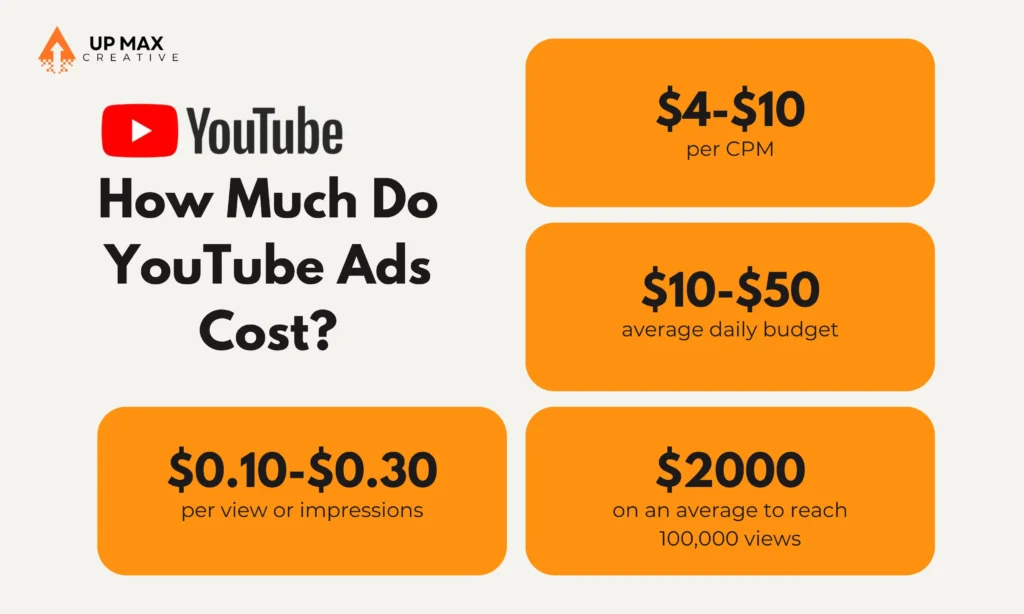
In 2025, most businesses running YouTube ads will often see benchmark ranges like these:
- Cost per view usually falls around $0.03 to $0.10
- Cost per 1,000 impressions often lands around $4 to $10 or more
- Cost per click is often around $1 to $4 for click-focused campaigns
- Starter monthly budgets often range from $500 to $5,000
- Growing brands may spend $5,000 to $25,000
- Large campaigns can easily go beyond $50,000
These numbers can vary a lot depending on the campaign setup. A small local business running a simple awareness campaign may spend far less than a national brand targeting competitive audiences in multiple markets. That is why averages are only a starting point. The real question is not just what YouTube ads cost, but what kind of budget gives you enough room to test, learn, and improve results over time.
What Affects YouTube Advertising Costs?
There is no single price for a YouTube ad because the platform runs on an auction model through Google Ads. That means advertisers compete for placements, and the final cost depends on who you are targeting, how relevant your ad is, and what objective you are optimizing for.
This is why two brands can run similar campaigns and still get very different outcomes. One business might get cheaper views but weak conversions. Another might pay more per view but generate a stronger return because the targeting, creative, and offer are better aligned. The cost only tells part of the story. The real focus should always be on return, not just cheap traffic.
1. Ad Format
Your ad format has one of the biggest impacts on pricing. Different formats are built for different campaign goals, so the cost structure changes based on how the ad appears and how users interact with it.
Here are the main YouTube ad formats in 2025:
Skippable in-stream ads let viewers skip after 5 seconds. You usually pay when someone watches 30 seconds, watches the full ad if it is shorter, or interacts with it. This is one of the most common and flexible formats.
Non-skippable in-stream ads are usually around 15 seconds and are charged on a CPM basis. These work better for awareness and message recall.
Bumper ads are short 6-second non-skippable ads, also charged by CPM. They are useful for quick, memorable branding.
In-feed video ads appear in search results, recommendations, or the home feed and often work well for educational or product-focused content.
YouTube Shorts ads continue to grow in 2025 and are especially useful for mobile-first campaigns and shorter attention spans.
Masthead ads are premium homepage placements mostly used by larger brands with much bigger budgets.
Some formats are better for awareness. Others are better for clicks, engagement, or conversions. Picking the right one matters just as much as setting the right budget.
2. Bidding Strategy
Your bidding strategy also shapes your total YouTube ad cost. Since YouTube ads run through Google Ads, advertisers can choose how they want Google to optimize delivery.
Common bidding options include:
- CPV, or cost per view, for awareness and engagement campaigns
- CPM, or cost per thousand impressions, for reach and visibility
- Target CPA for conversion-focused campaigns
- Maximize Conversions for automated lead or sales growth
- Target ROAS for revenue-focused campaigns with strong tracking
In 2025, automation is more common than ever, but it works best when tracking is clean and campaigns have enough data behind them. Smart bidding can work very well, but it still needs oversight. Letting automation run without a clear strategy is one of the quickest ways to waste budget. That is also why stronger digital advertising services often make such a difference. Good strategy matters as much as the platform itself.
3. Audience Targeting
The more refined your targeting is, the more your costs may shift. In many cases, tighter targeting raises prices because you are competing for a smaller and more valuable group of viewers.
Cost can be influenced by targeting choices like:
- Demographics
- Interests and behaviors
- Custom segments
- In-market audiences
- Remarketing lists
- Geographic targeting
For example, targeting a broad national audience may keep costs lower, but targeting a very specific high-intent audience may cost more. That does not necessarily mean it is inefficient. A more qualified audience often brings better results, which can improve overall return even if the raw cost per view or impression looks higher.
4. Competition and Industry
Like every paid advertising platform, YouTube ad costs rise when more advertisers want the same audience. Some industries naturally face stronger competition, especially finance, insurance, legal, software, and some eCommerce categories.
Seasonality matters too. Costs often increase during Q4, holiday shopping periods, large promotions, and major product launches. If more advertisers enter the auction at the same time, your costs usually rise with them. This is why timing and planning matter, especially for businesses trying to make every dollar count.
How to Optimize Your YouTube Ad Budget
A bigger budget does not automatically mean better results. The brands that do well with YouTube ads are usually the ones that test, refine, and improve their campaigns over time.
Start With a Realistic Budget
Do not try to do too much with too little. If possible, start with enough budget to gather useful data. For many businesses, that means testing with at least $500 to $1,000 instead of expecting meaningful results from a tiny spend.
Use the Right Format for the Goal
Do not use the same ad type for every campaign. Bumper ads are great for awareness. Skippable in-stream ads work better for storytelling and product education. In-feed ads are often useful when you want people to actively choose to watch.
Improve the Creative
A weak video can push your costs up quickly. If people skip right away or do not engage, your campaign becomes less efficient. A stronger hook, clearer message, and better call to action can improve view rates and reduce waste. Stronger content writing often helps here too, because the message inside the ad matters just as much as the visuals.
Refine Your Targeting
Exclude irrelevant audiences, review placements, and use remarketing where it makes sense. Better targeting reduces wasted impressions and helps your budget go toward viewers who are more likely to respond.
Track the Right Metrics
Do not focus only on views. Watch your:
- View rate
- Click-through rate
- Cost per conversion
- Conversion rate
- Return on ad spend
- Engagement
Cheap views do not mean much if nobody takes action after watching.
Use Retargeting
Remarketing often performs better because you are reaching people who already know your brand. This can improve efficiency and bring down your effective cost per conversion over time.
Are YouTube Ads Worth It in 2025?
Yes, YouTube ads can absolutely be worth it in 2025, but only when the campaign is built properly. The platform is especially strong for brands that want to combine video content, audience targeting, and scalable reach.
It works well because YouTube sits in a powerful space between search and social. People come to the platform to learn, compare, discover, and buy. That makes it useful for both upper-funnel awareness and mid-funnel consideration. When paired with remarketing, it can also support direct-response campaigns more effectively than many businesses expect.
The key is not just running ads. It is running the right ads for the right people with the right structure behind them. That often includes cleaner landing pages, better messaging, and stronger website development so the traffic from those ads has a better chance to convert once it clicks through.
How Upmax Creative Can Help
Running YouTube ads successfully takes more than uploading a video and setting a budget. The creative needs to connect, the targeting needs to make sense, and the campaign needs to support a bigger strategy. That is where Upmax Creative can help. Through stronger digital advertising services, clearer content writing, smarter website development, and a broader search and content strategy, Upmax Creative helps businesses build YouTube campaigns that focus on results instead of wasted spend.
For brands that want to improve how video fits into the bigger marketing picture, it also helps to think beyond just the ad itself. Supporting content like What We Wish You Knew About Marketing for Doctors in 2024 or Digital Marketing for Lawyers – How’s and Why’s shows how the full strategy around audience, message, and positioning still matters just as much as the platform.
Final Thoughts
YouTube advertising in 2025 is still one of the most flexible and powerful ways to promote a business online. Costs can vary widely depending on ad format, bidding strategy, audience targeting, competition, and creative quality. Some businesses may only need a few hundred dollars to test, while others may invest thousands each month to scale.
What matters most is not finding the cheapest views. It is building campaigns that generate real business results. When targeting is sharper, the creative is stronger, and the campaign is optimized around the right goals, YouTube ads can become a highly profitable part of your marketing strategy.